
The Uh-Oh Moment
As more and more AI-generated headshots begin to appear online, photographers and professionals alike are asking the same question:
Is AI about to replace headshot photography?
It's a fair question. After all, anybody can take a handful of photos with their phone, and if you feed AI ten of them, how hard can it be?
The Ah-Ha Moment
As it turns out, headshot photography is an interesting addition to the AI conversation because of how dependent a headshot is on the very thing artificial intelligence isn't—human.
Let’s be fair though—AI can absolutely create a headshot. But for those seeking a certain kind of headshot, 80% of the way is as good as 0%. So for now, at least, photographers who have studied the nuances of headshots can breathe a sigh of relief.
As photographers began exploring AI through retouching, Generative Fill, and fully AI-generated headshots, what initially felt like a threat quickly became something much more exciting.
Because AI both draws attention to the value of a truly authentic headshot while offering photographers incredible tools for creativity and efficiency.
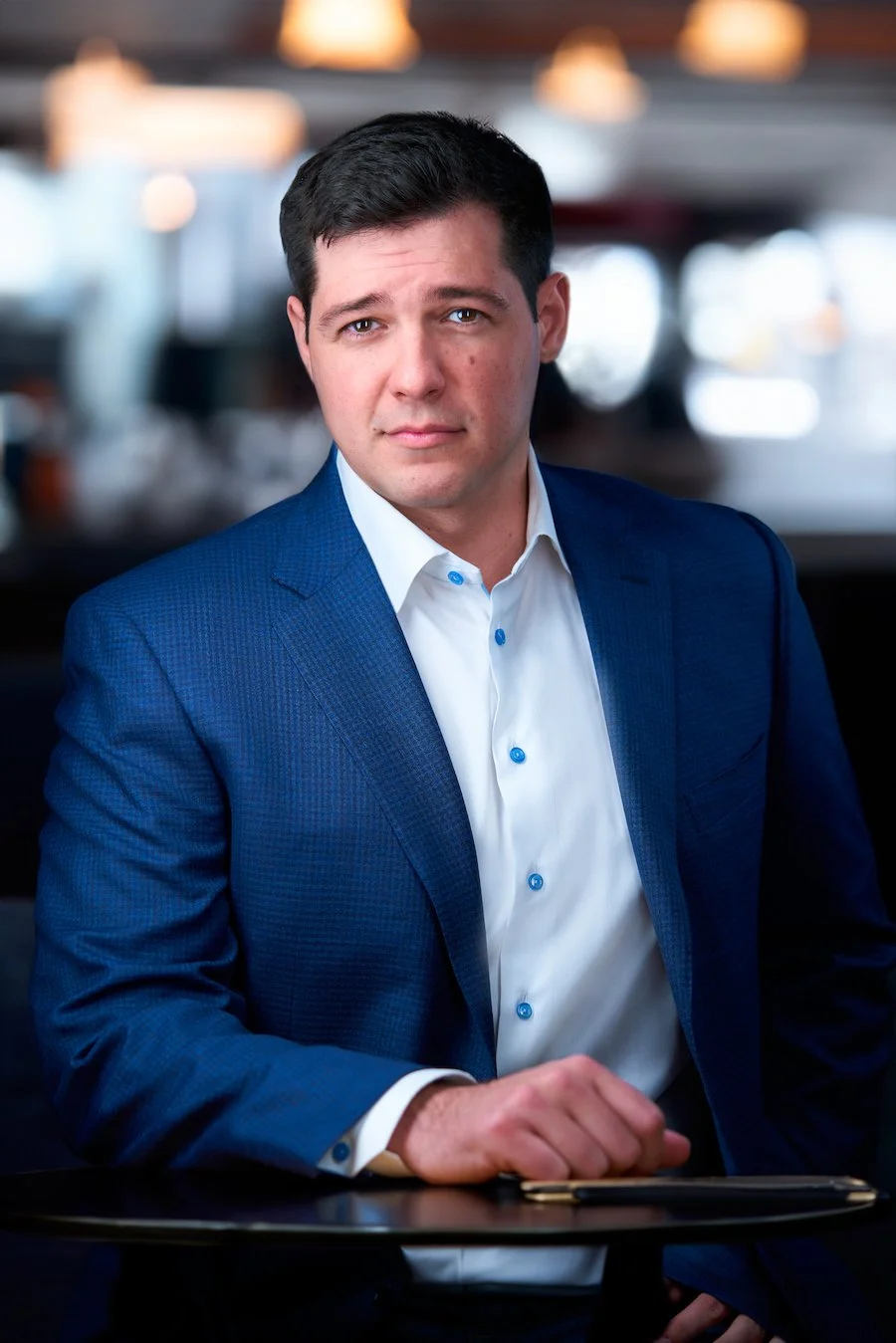

The ability to change and explore background options in post-production is a game changer, giving you the control of a studio with the visual storytelling of an environmental portrait.
Imagine a restauranteur looking for a portrait for a press release. It makes perfect sense to showcase them in a restaurant, drawing in people interested in fine dining and culinary arts.
But actually shooting in a restaurant presents challenges that often make the studio the better option.
The logistics are simpler too—you don't have to close the restaurant or photograph while people are trying to enjoy dinner.
With Generative Fill and (careful blending), we can create a studio portrait that feels like it was captured in a beautiful restaurant.
It can be a very powerful tool.


The Irony
Before making the next point, remember this is not about making an average headshot, but rather a purposeful headshot. When it comes to creating an effective headshot, even using AI still requires understanding many of the same creative decisions a professional photographer makes.
Prompting "professional headshot" isn't enough if you don't understand the decisions that actually make a headshot land.
Camera height, crop, lighting, expression, color, poses, etc. are all in balance to create perspective, balance, mood, and energy.
Without understanding those decisions, you may find yourself looking at an AI-generated headshot wondering why something feels off, without realizing the camera height makes you appear shorter, the perspective subtly changes your facial proportions, or the crop simply doesn't complement your hairstyle.
AI hasn't eliminated those creative decisions—it has simply shifted who has to make them.
The Human Factor
When it comes to generating an entire headshot, there remains one major issue for AI.
Surprise, surprise—it doesn't always look completely human.
The client shown above, for example, booked because she "didn't see herself" in the AI headshot.
I remember she was a pleasure to work with, and after our session I added her on linkedin, where she regularly shares thoughtful video updates. I noticed each of them begins with a genuine smile, and are consistently met with encouragement from her network. Between that, the impressive company she works for, and the way she presents herself, it came as no surprise to learn she'd been named to the 30 Under 30 list. She knows how to connect with people—which is probably why she wanted a headshot that actually looked like her.
So if you're wondering whether AI poses a threat to professional headshot photography, it's comforting to realize that it’s not just photographers who notice the differences. And this “humanness” is both a key ingredient in great headshots—and one of AI's biggest challenges.


The Future
It's worth noting that the look and feel of an AI headshot can actually fit well in certain industries - like tech and AI itself.
But for individuals and companies that want to differentiate themselves through trust, personality, and genuine human connection, it’s worth remembering that AI struggles most with the very thing headshot photography exists for: human individuality.
And with that, it really is almost poetic—and maybe a little obvious—that AI struggles most with the very thing headshot photography exists for: human individuality.
For photographers, that means our goal isn't to compete with AI as much as it is to recognize what we can offer that AI can't replicate.
That might mean intentionality with lighting, expression coaching, composition, or simply creating a true experience for the person standing in front of your camera, who thought taking headshots had to be stressful.
